

Brain Fog Treatment in Ocala, FL
Sharpen Focus and Mental Clarity
- Common In:
- Adults of all ages
- Primary Causes:
- Sleep, stress, illness, hormones
- Treatment Time:
- 20-25 minutes
- Results:
- 2 to 4 weeks


What Is Brain Fog?
Recognizing the Signs
Brain fog is not a formal diagnosis. It is a patient-reported cluster of cognitive symptoms: slowed processing speed, difficulty sustaining attention, word-finding trouble and a subjective sense that thinking takes more effort than it should. In clinical literature it is usually discussed under subjective cognitive complaint or cognitive dysfunction, and it is a recognized feature of many conditions rather than a condition itself.
When you read a paragraph three times without absorbing it, lose a word mid-sentence, or feel mentally drained by early afternoon on a normal workload, that is the experience patients describe as fog.
Patients tell us they have started writing everything down, avoiding complex conversations late in the day, and quietly worrying that something is wrong. It is unsettling precisely because it affects the faculty you use to assess it.
Why Brain Fog Happens
Understanding the Root Causes
01The Science
Cognitive performance depends on the prefrontal cortex maintaining attention while filtering distraction, a function called executive control. That system is metabolically expensive and unusually sensitive to disruption, which is why so many different conditions produce the same subjective symptom.
Sleep is the most common driver. Deep sleep is when metabolic waste is cleared from brain tissue and memories are consolidated, so even a few weeks of fragmented sleep degrades processing speed and attention measurably. Untreated sleep apnea is a frequent and often unrecognized cause.
Inflammation is the second route. Systemic inflammatory signaling affects neurotransmission and is a well-documented mechanism in post-viral cognitive symptoms, where fatigue and cognitive impairment are among the most commonly reported persistent features. Hormonal change, thyroid dysfunction, anemia, chronic stress, medication effects and depression all contribute as well. Because the prefrontal cortex sits at the center of this, TMS therapy for brain fog and focus targets that region. The National Institute of Mental Health covers the overlap with mood conditions.
02Deeper Understanding
Rule Out Before You Treat
Why Assessment Comes First
Brain fog is a symptom, and symptoms deserve a cause before they get a treatment. A number of the most common causes are straightforward to identify and genuinely reversible: hypothyroidism, iron or vitamin B12 deficiency, obstructive sleep apnea, poorly controlled blood sugar, and the cognitive side effects of common medications including some antihistamines, sedatives and anticholinergics.
Depression deserves specific mention because it frequently presents primarily as cognitive difficulty rather than as sadness, particularly in men and in older adults. Patients who describe only fog and poor focus are sometimes describing depression, and treating the fog without recognizing that misses the target entirely.
Progressive memory loss is a different matter. New disorientation, getting lost in familiar places, or a family member noticing decline before you do needs medical evaluation rather than wellness treatment. We will say so and refer. Patients whose symptoms include persistent low mood should read our depression and anxiety page.
What Accelerates Brain Fog?
Several factors degrade cognitive performance, and most patients who report fog have more than one operating at the same time.
- 01Poor Sleep QualityFragmented or insufficient deep sleep impairs waste clearance and memory consolidation measurably.
- 02Untreated Sleep ApneaRepeated overnight oxygen dips are a frequent and often unrecognized cause of daytime fog.
- 03Chronic StressSustained cortisol elevation affects the prefrontal regions that maintain attention and working memory.
- 04Post-Viral EffectsFatigue and cognitive impairment are among the most reported persistent symptoms after viral illness.
- 05Hormonal ChangePerimenopause, thyroid dysfunction and low testosterone all commonly present with cognitive complaints.
- 06MedicationsSome antihistamines, sedatives, anticholinergics and pain medications directly impair cognition.

Why Choose Chandra Wellness for Brain Fog Support in Ocala, FL
At Chandra Wellness Center we ask what is causing your fog before offering to treat it, because several of the most common causes are reversible and should be addressed first.
- Cause Before Treatment
- We ask about sleep, thyroid, bloodwork and medications before recommending anything.
- Physician Oversight
- Dr. Ravi Chandra, MD provides medical oversight for the wellness program.
- Honest Referral
- Progressive memory loss is referred for medical evaluation, not treated cosmetically.
- Clear Expectations
- Evidence in this specific area is developing, and we describe it that way.
- Complete Privacy
- One patient at a time in a private suite inside our Ocala practice, never a shared treatment floor.
- Treated Personally
- Every session is performed by Dr. Chandra herself, one patient at a time in a private suite.
Treatment Options Comparison
The treatment we offer for this concern is listed below. It is supportive wellness care and does not replace medical evaluation of cognitive symptoms.
| Treatment | Best For | Session Time | Results Timeline | Maintenance |
|---|---|---|---|---|
| TMS Therapy with Exomind | Focus and mental clarity support | 20 to 25 min | 2 to 4 weeks | Every 3 to 6 months |
You May Be Experiencing Brain Fog If...
Recognizing the pattern helps you know when to seek assessment. Progressive memory loss or new disorientation needs medical evaluation rather than a wellness consultation.
Rereading Everything
You read the same paragraph several times without absorbing what it says.
Word-Finding Trouble
Common words go missing mid-sentence and you talk around them instead.
Early Mental Fatigue
You feel mentally drained by early afternoon on an ordinary workload.
Fragmented Focus
Attention breaks up after twenty minutes and tasks take far longer than they used to.
Constant Note-Taking
You have started writing down things you would previously have simply remembered.
Slower Processing
Conversations and decisions feel like they need more effort than they once did.
Related Services
Explore the supportive wellness treatment we offer for focus.
View All Services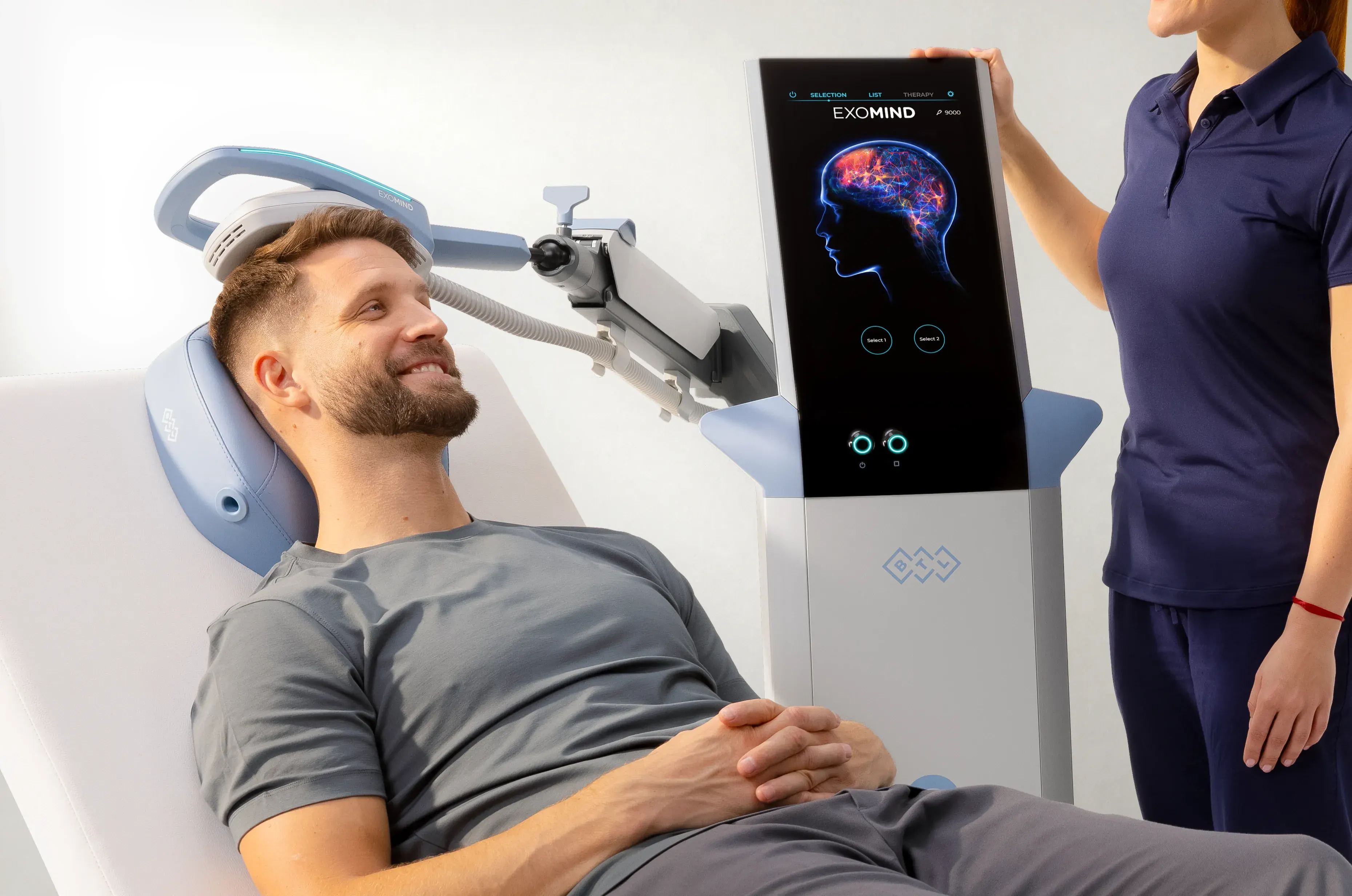
Treatments
TMS Therapy with Exomind
Non-invasive magnetic stimulation to support mood, focus and clarity.
- No Sedation
- Short Sessions
- No Medication

Treatments
Pelvic Floor Therapy with Emsella
Strengthens the pelvic floor in 28 minutes while you sit fully clothed.
- Fully Clothed
- No Technique
- 28 Minutes

Treatments
Muscle Recovery
Rebuilds strength and core support without loading a healing joint.
- Works When Weak
- Supports Rehab
- No Joint Loading
Frequently Asked Questions
Is brain fog a real medical condition?
It is a real experience but not a formal diagnosis. In clinical literature it appears as subjective cognitive complaint or cognitive dysfunction, and it is a recognized feature of many conditions including sleep disorders, thyroid disease, post-viral illness and depression.
What should I rule out first?
Start with the reversible causes: thyroid function, iron and vitamin B12, blood sugar, sleep apnea, and a review of medications that impair cognition. If you have not had basic bloodwork and a sleep assessment, that is the sensible first step before any treatment.
Could my brain fog actually be depression?
It might be. Depression frequently presents primarily as cognitive difficulty rather than sadness, especially in men and older adults. Patients describing only fog and poor focus are sometimes describing depression, which is why we take a careful history.
How quickly might I notice a change?
Patients who respond often notice sharper focus in the second to fourth week of a course, and focus tends to shift before anything else. Effects are cumulative rather than immediate. Some patients notice little, and we tell you that honestly rather than extending a course.
Is the evidence for TMS in brain fog strong?
It is developing rather than settled. The prefrontal region targeted is well established in attention and executive function, and meta-analytic work has examined stimulation of this area across cognitive as well as mood domains. We describe it as promising, not proven.
Can sleep really cause this much cognitive difficulty?
Yes, and it is the most common cause we see. Deep sleep is when metabolic waste is cleared from brain tissue and memory is consolidated, so even a few weeks of fragmented sleep degrades processing speed and attention in measurable ways.
What can I do at home?
Protect sleep timing and duration, get sleep apnea assessed if you snore or wake unrefreshed, exercise regularly since aerobic activity has reasonable cognitive evidence, limit alcohol, and review any sedating medications with your prescriber.
When should I see a doctor instead?
If you are getting lost in familiar places, if family notice decline before you do, if symptoms are worsening steadily, or if there is any new neurological change. Those need medical evaluation, and we will refer you rather than treat around them.
Schedule Today Your Complimentary Consultation
Scientific References
- Ceban et al., Brain Behav Immun. (2022). Fatigue and cognitive impairment in Post-COVID-19 Syndrome: A systematic review and meta-analysis. PMID: 34973396.
- Gorenshtein et al., Neurol Sci. (2024). Intervention modalities for brain fog caused by long-COVID: systematic review of the literature. PMID: 38695969.
- Kan et al., Lancet Psychiatry. (2023). Effects of repetitive transcranial magnetic stimulation of the left dorsolateral prefrontal cortex on symptom domains in neuropsychiatric disorders: a systematic review and cross-diagnostic meta-analysis. PMID: 36898403.
- Chou et al., Neurobiol Aging. (2020). A systematic review and meta-analysis of rTMS effects on cognitive enhancement in mild cognitive impairment and Alzheimer's disease. PMID: 31783330.
- Premraj et al., J Neurol Sci. (2022). Mid and long-term neurological and neuropsychiatric manifestations of post-COVID-19 syndrome: A meta-analysis. PMID: 35121209.
- National Heart, Lung, and Blood Institute. (2024). Patient information on sleep deprivation, deficiency and their effects on thinking and concentration.