

Double Chin Treatment in Ocala, FL
Define Your Jawline Again
- Common In:
- Adults 25 to 65
- Primary Causes:
- Genetics, fat, laxity
- Treatment Time:
- 20-30 minutes
- Results:
- 4 to 12 weeks


What Causes a Double Chin?
Recognizing the Signs
A double chin, clinically described as submental fullness, is the loss of a clean angle between the chin and the neck. Three separate structures can be responsible: a pad of submental fat, loose skin that no longer holds the contour, and laxity in the platysma muscle that spans the front of the neck. Most patients have some combination of all three.
When you look at a photograph taken slightly from below and see the jaw and neck reading as one line rather than two, that is submental fullness rather than simply weight.
Patients describe deleting group photos, tilting the chin up in every selfie, avoiding video calls, and feeling that this one area does not match how fit or slim the rest of them is. It is one of the most disproportionately frustrating features on the face.
Why Submental Fullness Happens
Understanding the Root Causes
01The Science
Fat distribution under the chin is largely genetic. The submental fat compartment is a distinct anatomical pocket, and its size is set by inheritance more than by body weight, which is why lean patients frequently have one and heavier patients sometimes do not. Losing weight reduces the pocket only partially.
Skin support is the second factor. Collagen declines by roughly 1 percent a year from the mid-twenties, and the thin skin under the chin has less structural reserve than the cheek. As it loosens, it stops draping tightly over the contour and the angle blurs even when fat volume is unchanged.
Muscle is the third. The platysma is a broad, thin sheet across the front of the neck, and as it loses tone the jawline loses its support from underneath. That is why Emface uses a submentum applicator that addresses tissue in this area rather than treating the cheeks alone, and why facial skin tightening with Exion is often combined with it. The American Academy of Dermatology outlines the non-invasive options in this area.
02Deeper Understanding
Posture, Bone Structure and Profile
Why Some Chins Look Fuller
Bone structure sets the baseline. A recessed chin, known as retrognathia, shortens the horizontal distance between the chin point and the neck, so the same amount of soft tissue reads as far fuller than it would on a projected jaw. No amount of fat reduction changes that geometry, which is why an honest profile assessment matters before any treatment is recommended.
Posture compounds it measurably. Forward head position, the near-universal consequence of phone and laptop use, shortens the front of the neck and slackens the platysma. Many patients gain visible definition simply from correcting head carriage, and it is worth addressing alongside any treatment.
Fluid retention and lymphatic congestion add a variable daily element, which is why the area can look noticeably better on some mornings than others. Patients whose main concern is loose skin across the neck rather than fullness under the chin should read our loose and sagging skin page.
What Accelerates a Double Chin?
Several factors influence submental fullness, and the mix differs considerably from one patient to the next.
- 01Genetic Fat PatternThe submental fat compartment is inherited, which is why lean patients often have one and heavier patients sometimes do not.
- 02Collagen DeclineThin skin under the chin loosens earlier than facial skin, so the contour blurs even without weight gain.
- 03Platysma LaxityThe broad neck muscle loses tone with age, removing the support that holds the jawline crisp.
- 04Forward Head PosturePhone and laptop use shortens the front of the neck and slackens the tissue under the chin.
- 05Chin ProjectionA naturally recessed chin shortens the profile so the same soft tissue reads as much fuller.
- 06Weight FluctuationRepeated gain and loss stretches the skin envelope, leaving looser tissue than before.
Why Choose Chandra Wellness for Double Chin Care in Ocala, FL
At Chandra Wellness Center we work out which of the three drivers is dominant in your case before recommending anything, because fat, skin and muscle need different answers.
- Three-Factor Assessment
- We identify whether fat, skin laxity or muscle tone is driving your contour first.
- Profile and Posture
- Chin projection and head carriage are assessed, since both change what treatment can achieve.
- Submentum Applicator
- Emface includes a dedicated applicator for the area under the chin, not just the cheeks.
- Honest Limits
- If your profile is driven by bone structure, we say so rather than selling sessions.
- National BTL Speaker
- Dr. Tina Chandra, DDS speaks nationally for BTL, so the protocols here are taught rather than preset.
- Treated Personally
- Every session is performed by Dr. Chandra herself, one patient at a time in a private suite.
Treatment Options Comparison
Compare the treatments we offer for jawline definition to find the approach that matches what is driving your profile.
| Treatment | Best For | Session Time | Results Timeline | Maintenance |
|---|---|---|---|---|
| Emface | Submentum and jaw definition | 20 min | 4 to 12 weeks | Every 3 to 6 months |
| Facial Skin Tightening with Exion | Loose skin under the chin | 30 min | 2 to 12 weeks | Every 3 to 6 months |
You May Be Bothered by a Double Chin If...
Recognizing what is driving your profile helps you understand whether treatment such as Emface Submentum for a double chin is likely to help.
Blurred Jaw Angle
The line between your chin and neck reads as one continuous curve rather than a defined angle.
Photo Avoidance
You tilt your chin up in every photo and delete anything taken from slightly below.
Video Call Discomfort
The laptop camera angle makes the area look worse and you find yourself repositioning constantly.
Out of Proportion
The rest of your body is where you want it but this area has not followed.
Necklines Bother You
You choose higher collars and scarves specifically to soften the area.
Softening With Age
The definition you had ten years ago has faded even though your weight has not changed.
Related Services
Explore treatments that define the jawline and firm the neck.
View All Services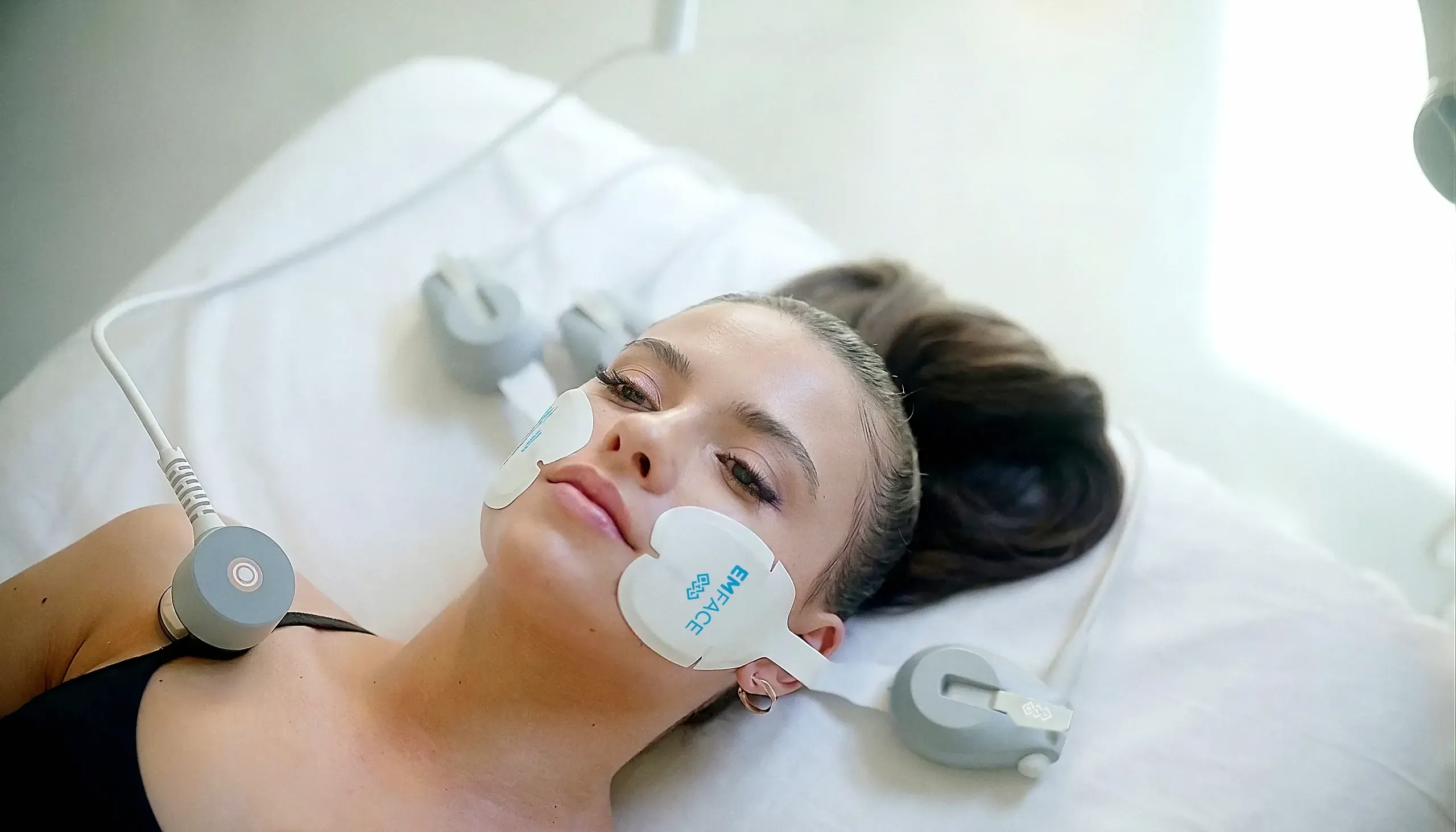
Treatments
Emface
Lifts, tones and smooths the face in 20 minutes with no needles.
- No Needles
- Twenty Minutes
- Treats Muscle
Treatments
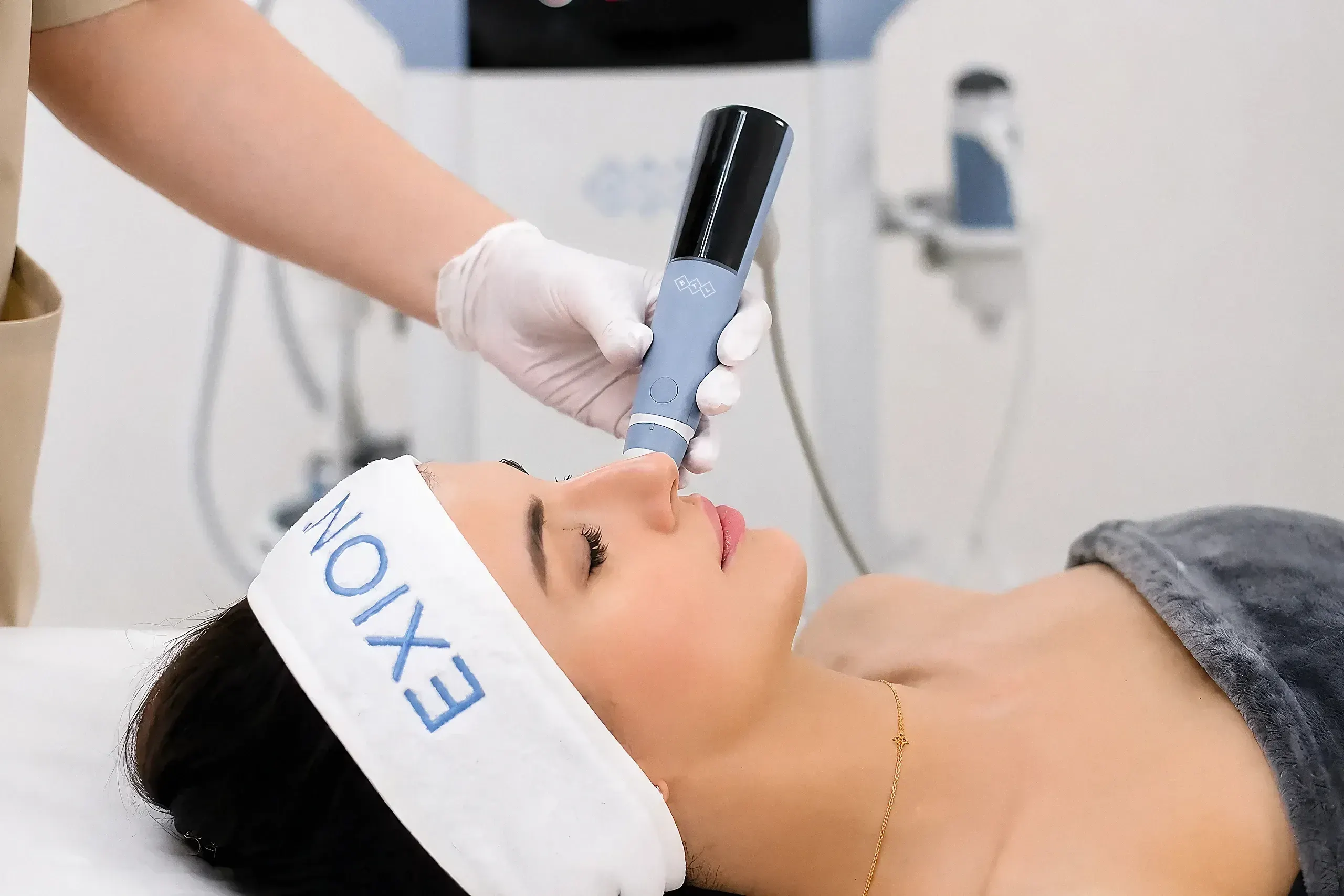
Facial Skin Tightening with Exion
Firms the jawline, cheeks and neck with controlled radiofrequency heat.
- No Needles
- Zero Downtime
- Builds Collagen
Treatments
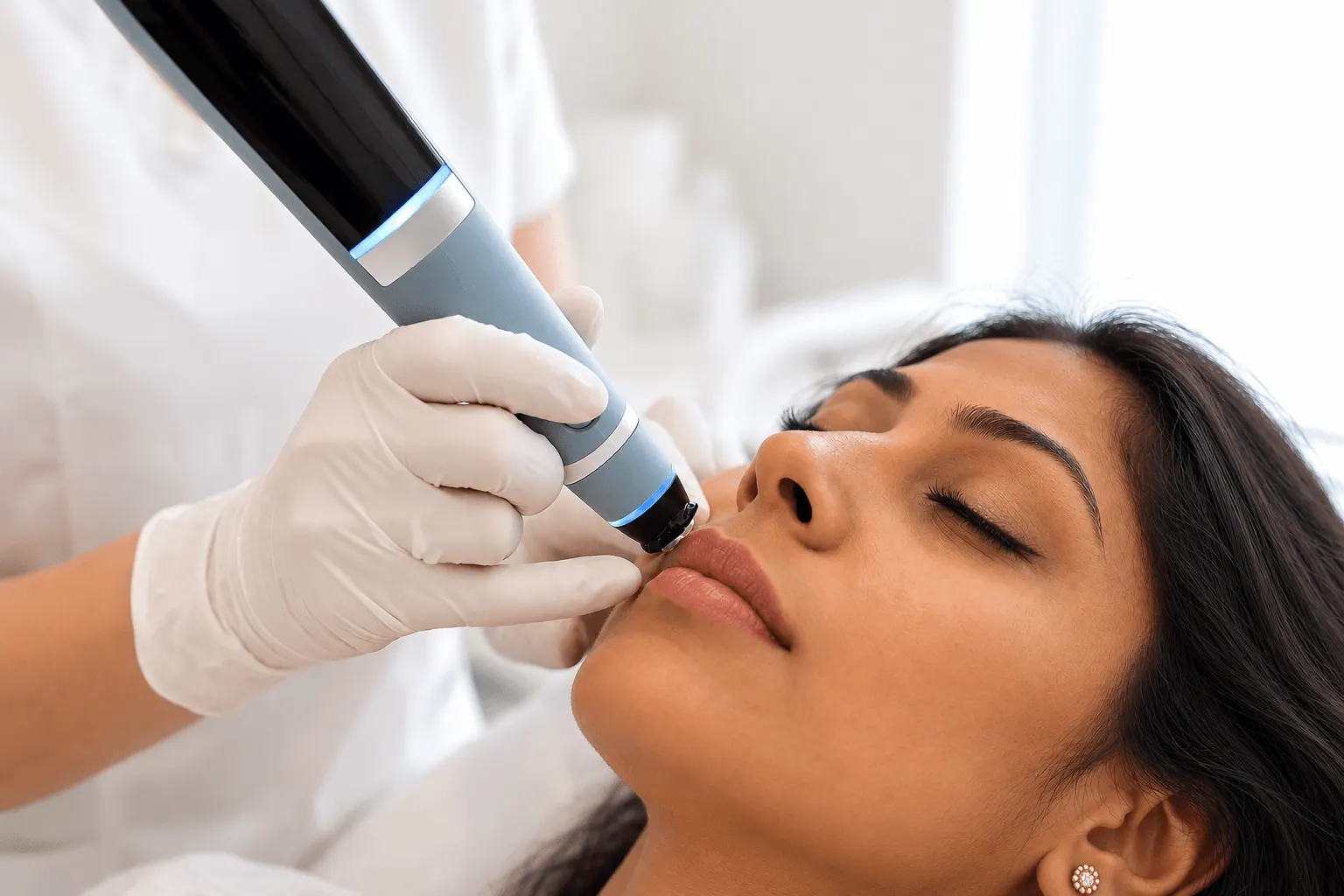
Lip Plumping with Exion
Fuller, smoother lips using radiofrequency instead of injectable filler.
- No Needles
- Quick Session
- No Foreign Product
Frequently Asked Questions
Will losing weight get rid of my double chin?
Partly at best. The submental fat compartment is largely genetic, which is why lean patients often still have one. Weight loss can reduce volume but frequently leaves loose skin behind, so many patients find the contour looks softer rather than sharper afterward.
How do I know which treatment is right for me?
It depends which of three factors dominates: fat volume, skin laxity or muscle tone. We assess all three plus chin projection at consultation. Patients with mostly laxity and muscle looseness do well with non-invasive treatment, and those with a large fat pocket may need another route.
How quickly will I see improvement?
Most patients notice a change in definition 6 to 8 weeks into a course, with the fullest effect around 12 weeks after the final session as collagen and muscle tone build. Standardized profile photographs make the difference far easier to judge than a mirror.
Is it normal for my jawline to soften as I age?
Yes. Collagen declines about 1 percent a year from the mid-twenties and the platysma loses tone, so the jawline blurs even when weight is stable. That is why patients often report losing definition without gaining a pound.
Can posture really affect my double chin?
It genuinely can. Forward head position from phone and laptop use shortens the front of the neck and slackens the tissue under the chin. Some patients gain visible definition from correcting head carriage alone, and it is worth working on alongside treatment.
What can I do at home between treatments?
Work on head and neck posture, keep your weight stable, apply sunscreen to the neck as well as the face, and stay hydrated to limit fluid retention in the area. Neck exercises help platysma tone modestly but consistently.
Can treatments be combined for the jawline?
Yes, and it is common. Emface addresses muscle and contour while Exion skin tightening addresses loose skin, so they cover different drivers. We sequence them so the same area is not treated twice in one visit.
When should I see a professional about this?
Whenever the area bothers you enough to change how you photograph or dress. An assessment is useful even if treatment is not, since knowing whether bone structure, fat or laxity is responsible saves you money on the wrong approach.
Schedule Today Your Complimentary Consultation
Scientific References
- DiBernardo et al., Aesthet Surg J. (2025). High-Intensity Focused Electrical Stimulation and Sync Radiofrequency+ Technology for Submental Volume Reduction: An MRI Study. PMID: 40179240.
- Goldberg et al., J Cosmet Dermatol. (2025). Adipocyte Apoptosis Following a Novel Method for Double Chin Reduction: A Pilot Human Histology Study. PMID: 39536780.
- Do et al., Facial Plast Surg. (2025). Cryolipolysis for Submental Fat Reduction: A Systematic Review and Meta-Analysis. PMID: 40473257.
- Park et al., Skin Res Technol. (2024). Lipolytic agents for submental fat reduction: Review. PMID: 38297988.
- Melley et al., Facial Plast Surg. (2025). Nonsurgical Chin and Prejowl Modification. PMID: 40389235.
- American Academy of Dermatology. (2024). Patient guidance on cosmetic treatments for submental fullness and facial contour.