

Acne Scar Treatment in Ocala, FL
Smooth What Acne Left Behind
- Common In:
- Adults 20 to 50
- Primary Causes:
- Inflammation, collagen loss
- Treatment Time:
- 45-60 minutes
- Results:
- 12 to 24 weeks

What Are Acne Scars?
Recognizing the Signs
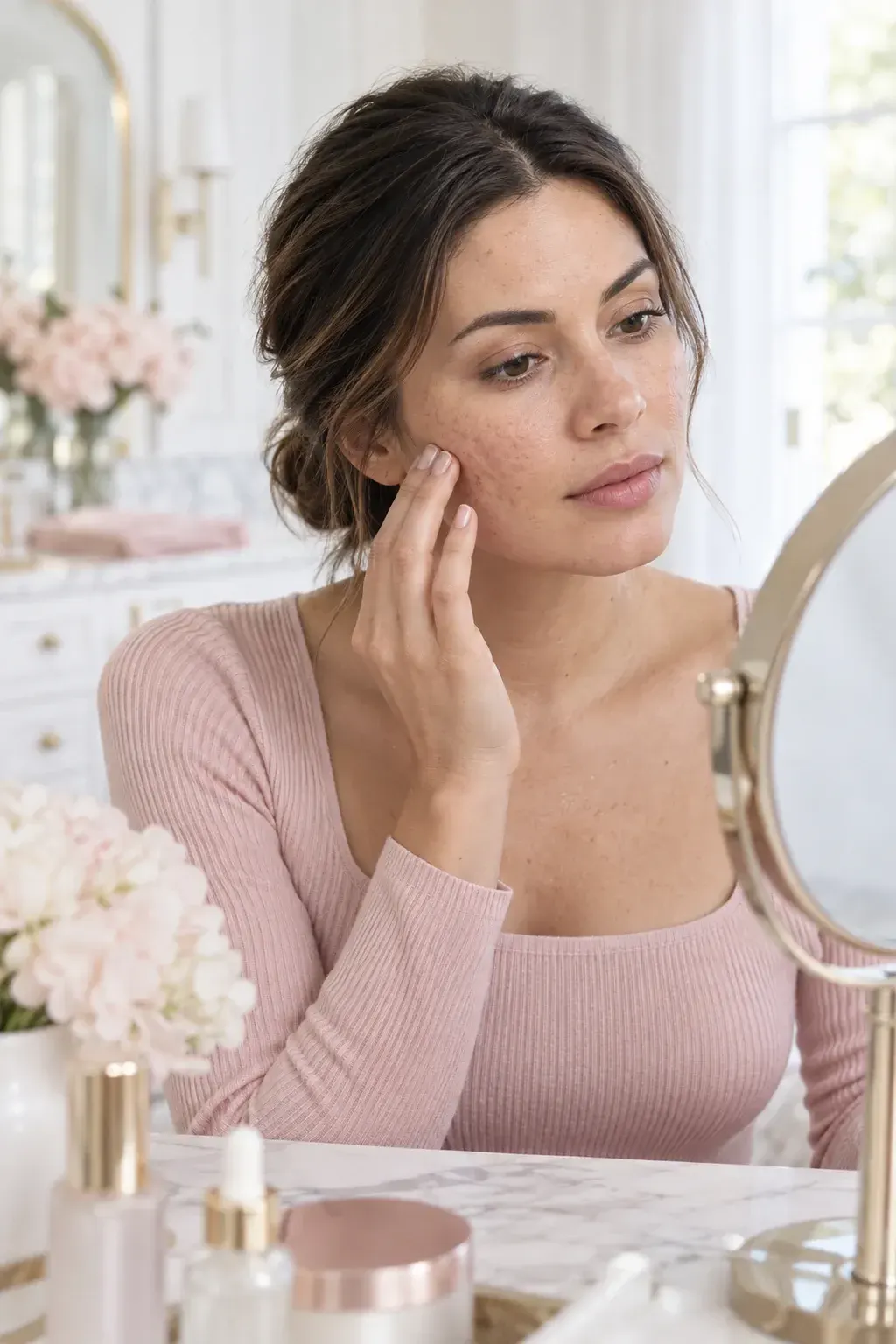
Acne scars are permanent changes in dermal architecture left behind after inflammatory acne. Atrophic scars, the depressed kind, form when the inflammatory process destroys collagen faster than the skin can replace it, leaving a deficit under the surface. They are usually classified as ice-pick, boxcar or rolling scars based on shape and depth.
When you tilt your face in side lighting and see pitting across the cheeks and temples that disappears in flat light, you are seeing atrophic scarring rather than active acne. The breakouts may have stopped years ago, but the surface never returned to what it was.
Patients describe checking their reflection in every mirror they pass, choosing photos by lighting rather than expression, and applying foundation that settles into the pits and makes them more obvious. It is a persistent, private frustration that has nothing to do with hygiene or effort.
Why Acne Scars Happen
Understanding the Root Causes
01The Science
Healthy skin turns over its cells in roughly 28 days and repairs minor damage without a trace. Inflammatory acne breaks that process. When a follicle ruptures below the surface, inflammatory cells release enzymes that degrade collagen in the surrounding dermis, and the deficit left behind becomes a depression.
The healing that follows is imperfect. Fibroblasts lay down disorganized collagen and fibrous strands tether the base of the lesion to deeper tissue, which is why a rolling scar dips even though the skin surface is intact. Depth of the original inflammation predicts scar depth more than anything else.
Ongoing collagen loss with age makes existing scars more visible over time, since thinner skin casts sharper shadows. That is why treatments that rebuild dermal collagen, such as RF microneedling with Exion, target the problem at its actual level. The American Academy of Dermatology notes that early acne treatment is the best way to prevent scarring.
02Deeper Understanding
Scar Type and Pigment Change
How Scar Shape Affects Treatment
Not all acne marks are scars. Post-inflammatory erythema, the pink or red flat marks, and post-inflammatory hyperpigmentation, the brown flat marks, are discoloration rather than structural loss. Both fade over months and respond to different treatment than true scarring does. Pressing the skin flat is a simple test: color changes remain visible, contour changes do not.
Among true scars, shape drives outcome. Rolling and shallow boxcar scars respond best to collagen remodeling because the deficit is broad and the base is not deeply tethered. Narrow, deep ice-pick scars respond least, since energy has to reach a very small, very deep target. Honest scar mapping at consultation is what makes expectations realistic.
Skin tone matters too. Deeper skin tones carry a higher risk of post-inflammatory pigment change after any resurfacing procedure, which is why conservative energy settings and strict sun protection are part of the plan. Patients whose main concern is color rather than contour should read our hyperpigmentation page.
What Makes Acne Scarring Worse?
Several factors influence whether acne leaves a scar and how visible that scar becomes over time, often acting together rather than alone.
- 01Delayed TreatmentThe longer inflammatory acne goes untreated, the more collagen is lost and the deeper the resulting scars tend to be.
- 02Picking and SqueezingManipulating a lesion pushes inflammation deeper into the dermis and reliably widens the eventual scar.
- 03Severity and DepthNodular and cystic acne scars far more often than surface papules because the inflammation sits deeper in the skin.
- 04Genetic Healing PatternSome people lay down disorganized collagen more readily, which is why siblings with similar acne can scar very differently.
- 05Sun ExposureUltraviolet exposure degrades collagen and darkens post-inflammatory marks, making existing scars more noticeable.
- 06Age-Related ThinningNatural collagen loss thins the surrounding skin, deepening shadows and making old scars look worse over time.

Why Choose Chandra Wellness for Acne Scars in Ocala, FL
At Chandra Wellness Center we map scar type before recommending anything, because rolling, boxcar and ice-pick scars do not respond the same way and honest expectations matter more than a sales pitch.
- Scar Mapping First
- Your scarring is examined and classified under proper lighting before any plan is written.
- Zone-Based Settings
- Needle depth and energy are adjusted across the cheeks, temples and jawline rather than held at one setting.
- Safe for All Tones
- Radiofrequency energy targets depth rather than pigment, so deeper skin tones can be treated.
- Honest Expectations
- You are told plainly what improvement is realistic and how many sessions it will take.
- National BTL Speaker
- Dr. Tina Chandra, DDS speaks nationally for BTL, so the protocols here are taught rather than preset.
- Treated Personally
- Every session is performed by Dr. Chandra herself, one patient at a time in a private suite.
Treatment Options Comparison
Compare the treatments we offer for acne scarring and skin texture to find the approach that fits your scar type and schedule.
| Treatment | Best For | Session Time | Results Timeline | Maintenance |
|---|---|---|---|---|
| RF Microneedling with Exion | Pitted and rolling scars | 45 to 60 min | 12 to 24 weeks | Every 3 to 6 months |
| Facial Skin Tightening with Exion | Overall texture and firmness | 30 min | 2 to 12 weeks | Every 3 to 6 months |
You May Be Dealing With Acne Scars If...
Recognizing the signs of acne scarring helps you understand when professional treatment such as RF microneedling in Ocala, FL is likely to help.
Visible Pitting
Your cheeks or temples show small depressions that appear in side lighting and vanish in flat light.
Makeup Settles In
Foundation collects in the indentations and emphasizes them rather than covering them by mid-day.
Uneven to Touch
Running a finger over your cheek feels textured or dimpled rather than smooth.
Marks That Stayed
Your breakouts cleared years ago but the surface never went back to how it looked before.
Photo Avoidance
You choose camera angles and lighting to hide texture, or filter every photo you post.
Widened Pores
Pores across the nose and inner cheeks look larger than they used to, alongside the scarring.
Related Services
Explore treatments that address acne scarring and skin texture.
View All Services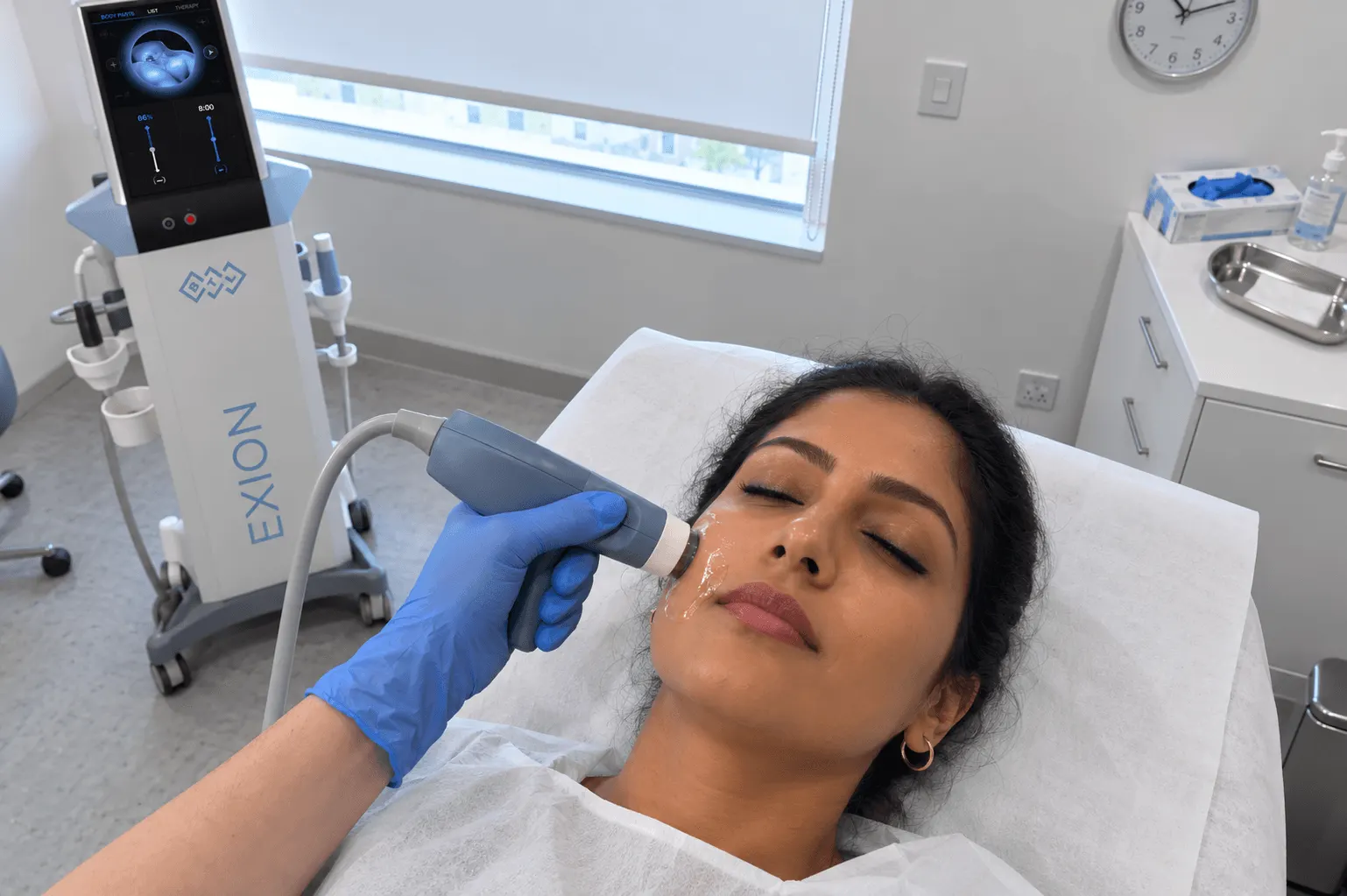
Treatments
RF Microneedling with Exion
Smooths texture, softens acne scars and evens tone on the face and body.
- Face and Body
- Short Downtime
- Treats Scarring
Treatments
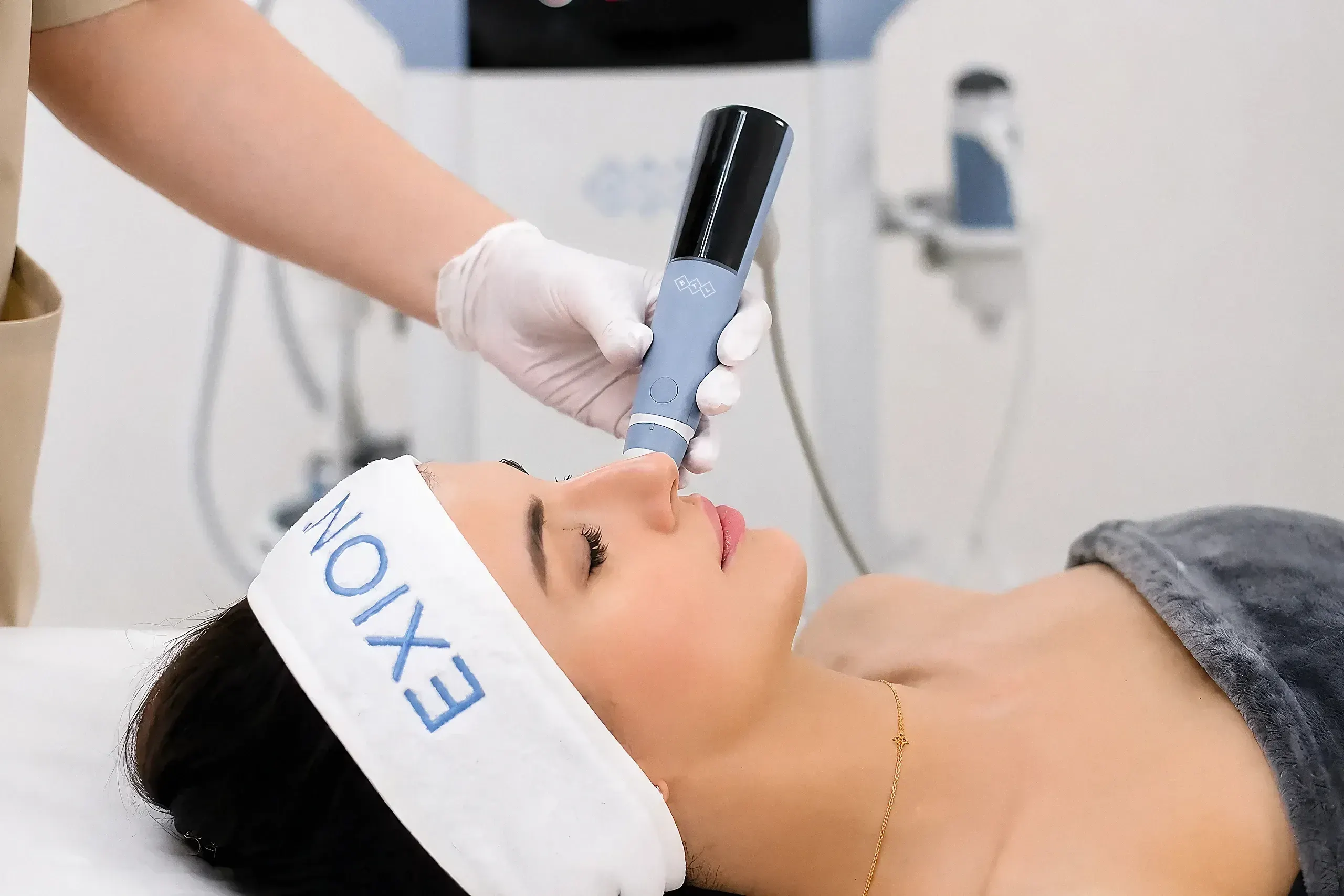
Facial Skin Tightening with Exion
Firms the jawline, cheeks and neck with controlled radiofrequency heat.
- No Needles
- Zero Downtime
- Builds Collagen
Treatments
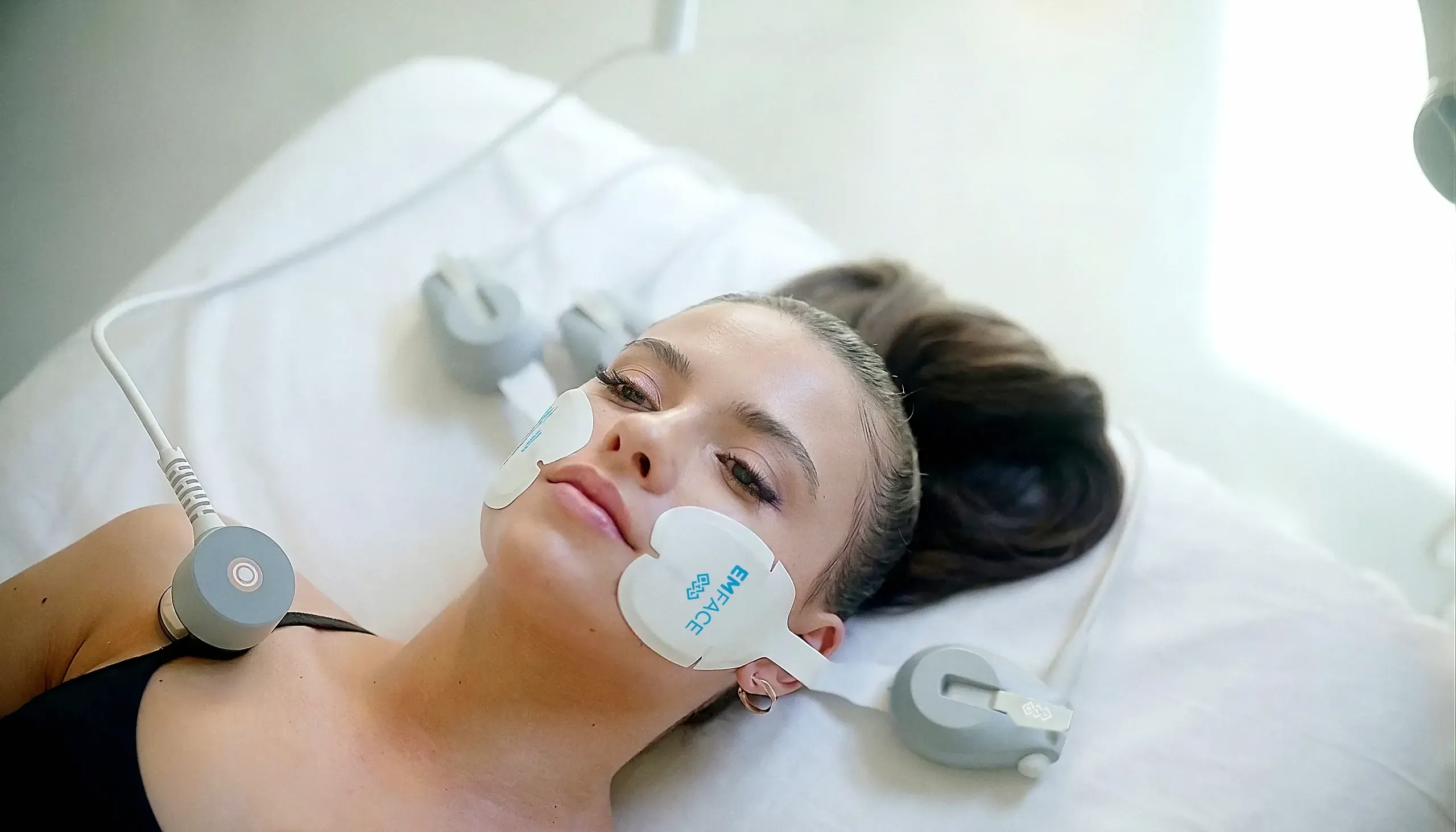
Emface
Lifts, tones and smooths the face in 20 minutes with no needles.
- No Needles
- Twenty Minutes
- Treats Muscle
Frequently Asked Questions
Can acne scars go away on their own?
True atrophic scars do not resolve on their own, because collagen has been lost from the dermis. Flat red or brown marks left after a breakout are discoloration rather than scarring and usually fade over six to twelve months. Pressing the skin flat helps tell the two apart.
How do I know which treatment is right for my scars?
Scar shape decides it. Rolling and shallow boxcar scars respond best to collagen remodeling, while narrow ice-pick scars respond least. We examine and classify your scarring under proper lighting first, then recommend a plan and a realistic number of sessions.
How quickly will I see improvement?
Skin usually looks brighter and feels smoother within 3 to 4 weeks of a first session. Scar depth changes more slowly as collagen matures, with the clearest improvement 12 to 24 weeks after a series. Standardized photos at each visit make the change easy to judge.
Is it normal for my acne scars to look worse as I get older?
Yes, and it is a common complaint. Natural collagen loss thins the skin surrounding a scar, so the same depression casts a sharper shadow than it did a decade earlier. Treating the dermal collagen deficit addresses both the scar and the thinning around it.
Can sun exposure affect my acne scars?
It can. Ultraviolet exposure degrades collagen, which worsens the contrast around a depressed scar, and it darkens post-inflammatory marks so they take much longer to fade. Daily broad-spectrum sunscreen is the single most useful thing you can do between treatments.
What can I do at home between treatments?
Keep sun protection consistent, stay on any acne treatment your prescriber has given you, and avoid picking. Medical-grade skincare supports the healing window after treatment, and Alastin products are available in the office if you want a clinical-strength option.
Can multiple treatments be combined for acne scars?
Yes, and combinations often work better than one modality alone. Many patients alternate RF microneedling for scar depth with facial skin tightening for overall firmness, spacing sessions so the skin recovers fully between them. We sequence this at consultation.
When should I see a professional about acne scarring?
Once your active acne is controlled, since treating scars while breakouts continue simply creates new ones. If you are still breaking out, see a dermatologist or prescriber first. We are glad to assess your scarring in the meantime and plan for later.
Schedule Today Your Complimentary Consultation
Scientific References
- Shen et al., Aesthetic Plast Surg. (2022). Microneedling Monotherapy for Acne Scar: Systematic Review and Meta-Analysis of Randomized Controlled Trials. PMID: 35426044.
- Wu et al., PeerJ. (2025). Optimal treatment options for acne scars in patients with historic acne: a systematic review and network meta-analysis. PMID: 41081097.
- Li et al., J Cosmet Dermatol. (2022). Meta-analysis of fractional radiofrequency treatment for acne and/or acne scars. PMID: 36062400.
- Sitohang et al., Int Wound J. (2021). Microneedling in the treatment of atrophic scars: A systematic review of randomised controlled trials. PMID: 33538106.
- Mujahid et al., Dermatol Surg. (2020). Microneedling as a Treatment for Acne Scarring: A Systematic Review. PMID: 31356435.
- American Academy of Dermatology. (2024). Patient guidance on acne scar types, prevention and treatment options.